 Menu
Menu

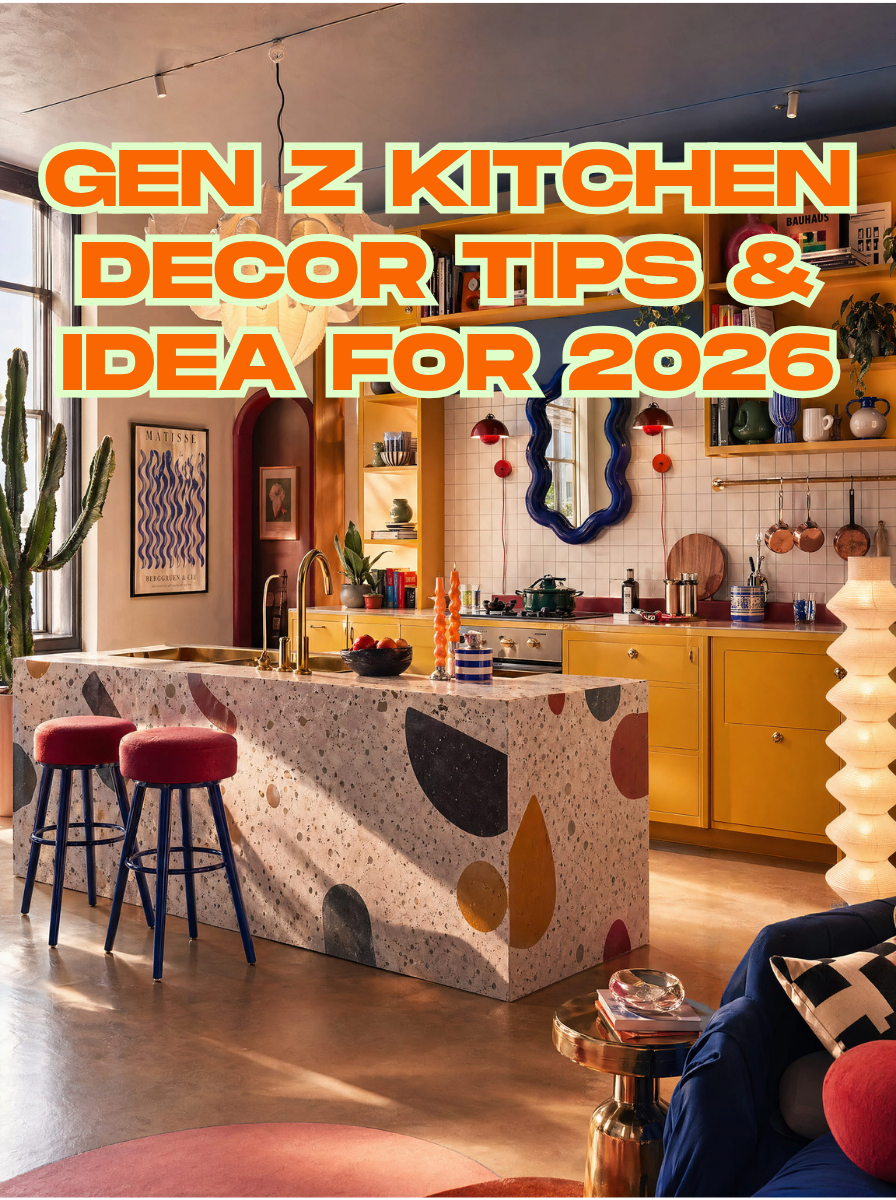
Your kitchen counter shouldn't look like an afterthought. Gen Z treats functional spaces — the kitchen, the dining area, even the countertop — with the same intentionality as a living room gallery wall. Here's how to bring that energy to your kitchen and dining space without a renovation budget or a staging crew.
What defines a Gen Z kitchen and dining aesthetic?
Gen Z kitchen and dining decor is defined by the rejection of the default — the beige, the matching set, the "bought everything from one place on a Sunday afternoon" look. The Gen Z approach is object-centric: individual pieces with real personality, handcrafted textures, ceramics in unexpected glazes, tableware that doesn't match but clearly belongs together. The kitchen and dining area become an extension of the same self-expressive logic that governs every other room.
Two 2026 Pinterest Predicts trends map directly onto this approach. FunHaus — the circus-inspired maximalism trend built on bold shapes, unexpected color combos, and exaggerated form — translates into kitchen decor as playful ceramics, bottle-shaped plates, and objects that make you do a double-take. Afro-Bohemian Decor, the trend rooted in Nigerian textiles and handcrafted object traditions, aligns with the Gen Z appetite for artisan-made pieces: ceramic teapots with visible hand-forming marks, underglaze-painted bowls, woven textiles at the table.
The unifying principle: every object in the kitchen and dining space should look chosen, not defaulted to.
Make your countertop a composition, not a dumping ground
The countertop is the most visible surface in a kitchen, and for most renters it functions as a horizontal catch-all. Gen Z kitchen decor reclaims it as display space.
The principle is the same as any good shelfscape: vary heights, vary textures, anchor with one larger object, fill with smaller ones. On a kitchen counter, this means a ceramic teapot or coffee pot as the tall anchor, a small tray or bowl to corral everyday objects, and one or two pieces that have no function except looking good.
The Handcrafted Ceramic Pot Set earns anchor status on any counter. Handcrafted ceramics carry the kind of material specificity that mass-produced kitchenware never achieves — slight variations in the glaze, visible throwing marks, a weight that communicates quality. It's the kind of investment that changes the read of everything else on the counter around it.

Counter composition rule: Never more than three "heights" of objects on a countertop. Tall anchor (teapot, plant, bottle), mid-height (candle, ceramic cup, small vase), and flat (tray, cutting board, placemat). More levels than three and it reads as clutter, not composition.
Build a coffee and tea station with personality
The coffee or tea station has become one of the most photographed domestic spaces on social media — and for good reason. It's a small footprint that rewards visual attention. Gen Z coffee stations look curated, not assembled from impulse buys.
A strong station has three components: a functional centerpiece (the coffee maker or kettle), a collection of vessels (mugs, cups, a small pitcher), and a surface layer (a tray, a small ceramic object, maybe a single stem in a bud vase).
The Stackable Ceramic Mug handles the vessel role well — ceramic construction means it retains heat properly and photographs with the matte, tactile surface quality that flat white cups never deliver. For Gen Z interiors, matching mugs are out; the better approach is three or four different cups in a shared color family. Warm stone tones, dusty blues, and earthy terracottas read as intentional without being matchy.

Add a small candle holder nearby for evening use. The Reversible Glass Candle Holder brings the chromatic punch that the rest of the earthy-ceramic palette benefits from — cobalt and deep blue have been consistent Gen Z accent colors since 2023, and blue glass specifically reads as both retro (1970s kitchen glass, vintage cobalt bottles) and contemporary.

Set a table that looks like a decision
Gen Z tablescapes don't match. They coordinate. There's a difference. Matching means every piece came from the same box. Coordinating means every piece was chosen for how it sits next to the others — shared tones, complementary textures, one unusual element that makes the whole composition more interesting.
The first building block is tableware with visual character. The Underglaze Square Ceramic Bowl brings hand-painted detailing in underglaze — a ceramic technique that fuses the design into the surface during the firing process, making it food-safe and dishwasher-durable while retaining the handmade look. Underglaze painting has roots in Chinese ceramics traditions dating back to the Tang Dynasty (618–907 CE), and the technique's visible brushwork gives each piece slight variation that manufactured dinnerware simply doesn't have.

Add a second layer of personality with complementary small pieces. The Thumb-Handle Dipping Saucers work for both function and composition — scatter them across the table as condiment holders, sauce vessels, or small snack bowls. The Nordic minimalist form language (clean profiles, neutral glaze) balances against more expressive painted tableware without competing.

For entertaining, the Sauce-Bottle Dipping Bowls lean into the FunHaus playfulness directly — bottle-shaped plates are exactly the kind of object that makes a table look like it was set by someone who has opinions, not someone who just set a table. Use them for side dishes, appetizers, or as individual serving pieces.

Tablescape shortcut: Choose one "hero" color for the table — a tablecloth, runner, or the dominant glaze color in your tableware. Then add two neutrals (cream, warm white, stone) and one accent (a candle in a contrasting color, a single bloom, a bright napkin). The hero color does the work; the neutrals give it room.
Open shelving: the Gen Z display strategy for kitchens
Open shelving is polarizing in interior design circles, but for Gen Z renters it's almost non-negotiable — it's the primary display surface in a kitchen, and display is the point. The challenge is keeping open shelves from reading as messy.
The rule borrowed from gallery curation applies here: negative space is part of the composition. Don't fill every inch. Leave gaps. Group objects in clusters of three, vary heights within each cluster, and keep at least one full shelf deliberately sparse.
For ceramics on display, mix functional and purely decorative. A shelf with mugs, a ceramic vase, a small bowl, and one larger decorative piece reads as collected. A shelf with only functional ceramics reads as storage. A shelf with only decorative pieces reads as a shrine.
The High-Gloss Ceramic Vase belongs in the decorative anchor role — a larger ceramic with real presence that sets the visual register for everything else on the shelf around it. Invest in one high-quality decorative piece per shelf zone and fill in around it with lower-cost functional pieces.

Colors and materials for Gen Z kitchens in 2026
The 2026 Gen Z kitchen and dining palette follows the same two-mode logic as the rest of the apartment.
Earthy mode — the dominant approach: warm stone (travertine, cream, sand), terracotta, sage, dusty blue. Materials: handcrafted ceramic, natural wood cutting boards, linen or cotton textiles, rattan, matte-finish objects. This mode photographs well in natural light and ages gracefully.
Bold mode — applied as accents: cobalt blue, tomato red, butter yellow, acid green. In a kitchen or dining space, bold mode works best as a single pop against an earthy base — one cobalt glass holder against cream ceramics, one tomato-red tray on a stone-toned counter.
Hardware and fixture metals: brushed brass and matte black are the Gen Z standards for kitchen fixtures. Polished chrome reads as 2015. Brushed nickel is inoffensive but invisible. Brass adds warmth; matte black adds edge — pick one and be consistent.
Materials to avoid: faux wood vinyl (reads as temporary), all-white everything (requires constant maintenance and looks clinical), acrylic or plastic decorative objects (the one exception is deliberate vintage kitsch, which is its own aesthetic category).
Common mistakes in Gen Z kitchen and dining decor
Buying a full matching set. A matching 12-piece dinnerware set is a shortcut that shows. Build a table setting gradually — buy pieces you actually like, and let the coordination happen naturally.
Treating the counter as storage only. Every object on a countertop either adds to or subtracts from the room's visual value. Audit your counter: what's there because it needs to be (the coffee maker, the knife block), and what's there by default (the random takeout container, the receipt stack)? Remove the defaults, replace with one or two objects that earn display status.
Ignoring the dining table as a design surface. Most renters set the table only when people are coming over. Gen Z kitchen and dining decor keeps the table set — or at least composed — as a daily visual. A tray with a candle, two placemats, and a small ceramic object is all it takes.
Chasing all trends at once. Pick one trend anchor per year and build toward it. If you're going FunHaus-playful in 2026, commit to that through your tableware and accent objects. If you're going Afro-Bohemian and artisan-handcrafted, let that logic guide your purchases. Mixing three trend directions produces a room that looks undecided.
FAQ: Gen Z kitchen and dining decor
What is Gen Z kitchen decor? Gen Z kitchen decor is characterized by handcrafted and artisan objects, mixed ceramics in coordinated (not matching) palettes, countertop compositions treated as visual displays, and a deliberate rejection of matching sets and mass-produced aesthetics. Key influences include the FunHaus trend (playful, bold, form-forward objects), Afro-Bohemian Decor (handcrafted textures, artisan ceramics), and the broader Gen Z commitment to self-expression through everyday objects.
How do you decorate a kitchen for Gen Z aesthetics? Start with three zones: the countertop (build a composition with varying heights and one anchor piece), the open shelving or display area (mix functional and decorative ceramics with negative space), and the dining table (coordinate tableware by color family rather than matching set). Choose one palette mode — earthy naturals or bold accents — and let it guide material and color choices throughout.
What tableware do Gen Z apartments use? Gen Z apartments favor handcrafted and artisan-adjacent tableware: ceramics with underglaze painting or visible throwing marks, mix-and-match pieces in a shared color family, and playful forms (shaped plates, asymmetric bowls) that add visual personality to a table setting. Matching dinnerware sets from big-box stores are the opposite of the aesthetic.
What are the best kitchen decor trends for 2026? The two strongest 2026 kitchen and dining trends from Pinterest's annual forecast are FunHaus (circus-inspired maximalism — playful object forms, bold color accents, exaggerated shapes) and Afro-Bohemian Decor (handcrafted artisan pieces, Nigerian textile influences, natural materials). Both trends favor individual statement pieces over coordinated sets and reward maximalist countertop and shelf styling.
How do you style open shelves in a Gen Z kitchen? Use the gallery principle: leave deliberate negative space, group objects in odd numbers (three is the reliable baseline), vary heights within each group, and mix functional pieces (mugs, bowls) with purely decorative ones (a ceramic vase, a small sculptural object). Invest in one high-quality decorative anchor per shelf zone and fill around it with lower-cost functional pieces.
What colors work in a Gen Z kitchen in 2026? The primary Gen Z kitchen palette for 2026 is earthy — warm stone, terracotta, sage, dusty blue — with bold accents used sparingly (cobalt glass, tomato-red tray, butter-yellow textile). Handcrafted ceramics in matte, natural-toned glazes are the material foundation. Brushed brass or matte black hardware finishes the look. Polished chrome, all-white, and gray-washed wood are all strongly out of step with 2026 Gen Z aesthetics.
Browse the full Retro Radius kitchen and dining collection for everything featured here and more.
Share:
Gen Z Living Room Decor: The 2026 Guide
Dopamine Decor Is Reshaping the Way Gen Z Thinks About Home