 Menu
Menu

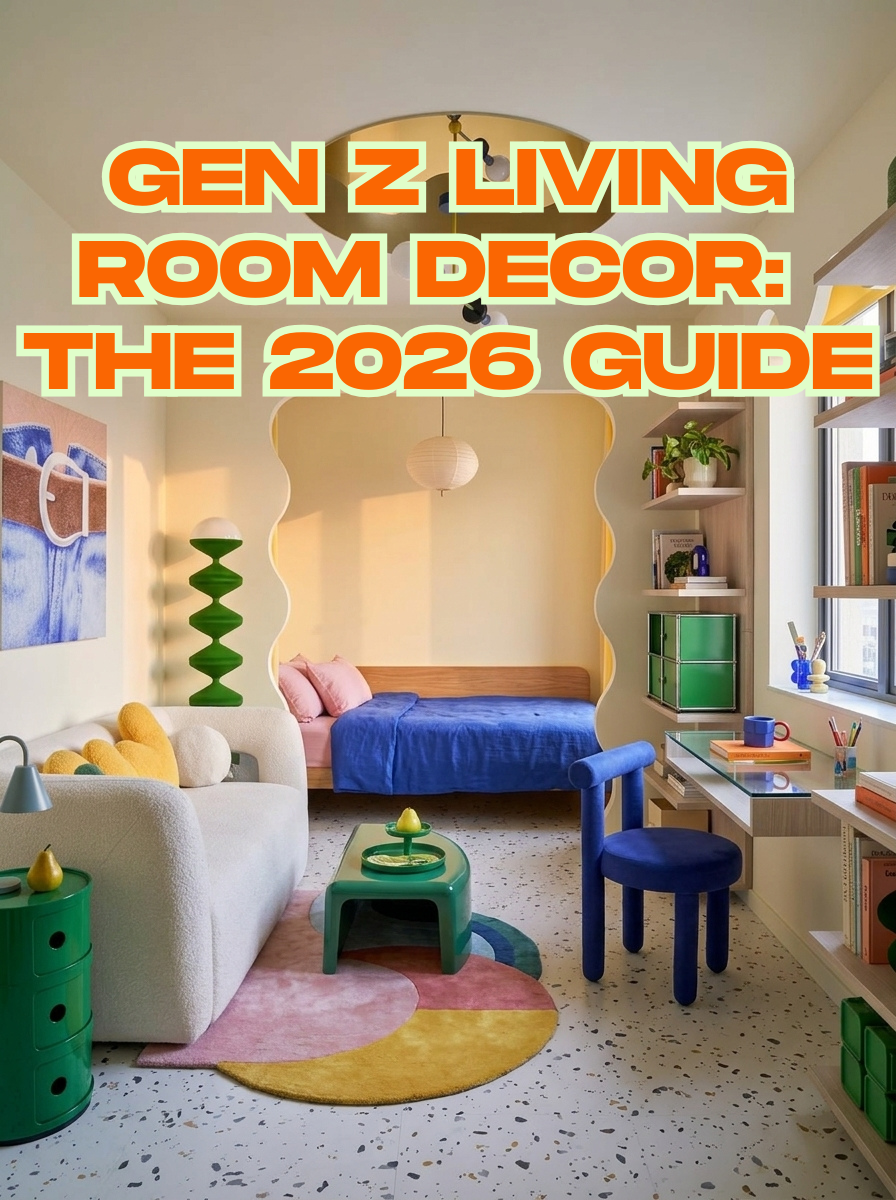
Gen Z living rooms don't follow a single rulebook. They mix eras, go bold with color, treat objects as self-expression, and take more cues from Pinterest mood boards than interior design magazines. The result — when done right — is a room that feels like a personality, not a showroom. Here's how to put it all together.
What is Gen Z interior design?
Gen Z interior design is defined by intentional personality over stylistic consistency. Rather than committing to one look, Gen Z spaces layer aesthetics — dopamine decor's bold color, Memphis-era geometry, soft organic forms, maximalist object collections — into something that reads as distinctly theirs. The key traits: one bold color or texture used as an anchor, at least two mixed furniture eras, statement lighting, and decorative objects that double as conversation starters. Gen Z decorating is driven by self-expression first, and resale value never.
According to Pinterest's 2026 trend forecast, two home aesthetics are surging right now: FunHaus — circus-inspired maximalism with bold stripes, exaggerated shapes, and playful use of color — and Neo Deco — a modern take on Art Deco featuring geometric forms, chrome and brass accents, and jewel tones. Both read as naturally Gen Z: maximal but intentional, bold but not accidental.
The essential pieces for a Gen Z living room
Statement lighting first
Lighting is the most underrated design decision in a living room. Gen Z interiors lean toward sculptural pendant lights and chandeliers — something with character, not the beige flush-mount that came with the apartment.

The Sculptural Resin Pendant Lamp hangs like a piece of cast sculpture — an irregular resin shade in dark green, burgundy, or milk white that glows from within and swaps harsh overhead glare for warm, diffused light. It's the kind of piece that changes the entire mood of a space without a renovation.
One practical rule: for ceilings under 8 feet, the bottom of a pendant fixture should hang no lower than 7 feet from the floor. For dining or living spaces, 60–72 inches above the floor is the standard range.
A mirror that does more than reflect
Mirrors are essential in small living spaces — they add depth and bounce light — but the Gen Z approach is to treat them as art. Not a plain rectangle from a big-box store, but something with shape, texture, or a clear visual point of view.

The Daisy Petal Wall Mirror fits this perfectly: it applies modernist compositional logic to floral motifs, making it equally at home in a Neo Deco arrangement or a layered gallery wall. It's one of the highest-impact, lowest-effort living room upgrades possible. For gallery walls: mix two mirrors with three to five framed pieces, vary sizes intentionally, and keep one consistent element — frame finish or shape family — to prevent chaos.
A bookcase or display shelf that tells a story
Gen Z living rooms are full of objects — vinyl records, ceramics, small sculptures, plants, books arranged both spine-out and cover-facing. A good bookcase isn't storage; it's a stage.

The Curved Wire Desk Bookshelf brings industrial structure with an organic twist — curved metal wire that reads as sculptural even when the shelves are empty. It works as both functional storage and a statement piece against a neutral or painted wall. The styling rule that works every time: one-third books or flat objects, one-third plants or organic textures, one-third decorative objects. Never fill every shelf the same way.
Texture layering on the sofa
The sofa is usually the most expensive piece in a Gen Z living room — and often the most visually boring, because the budget gets spent there and there's nothing left for textiles. The fix: layer. Woven cushions, boucle throws, velvet pillows in colors that push against each other.

The Woven Texture Throw Cushion adds the handmade, artisanal texture that softens hard-edged furniture and grounds maximalist arrangements without adding visual noise. Pair with a throw in a complementary color — butter yellow with tomato red, acid green with cream — and the sofa becomes a composition, not just a place to sit.
Small objects with serious visual weight
This is where Gen Z living rooms actually win: the details. A sculptural tray, a graphic tissue box, an oddly shaped vase — objects that are functional but look chosen with intention.

The Memphis Geometric Tissue Box is a standout example. Its bold, blocky geometry and confident color blocking pull straight from the 1980s Memphis design movement — the graphic, anti-minimalist look resurging through the FunHaus and dopamine-decor trends. An object this small shouldn't carry this much room presence, but somehow it does.
What colors work in Gen Z living rooms in 2026?
The 2026 Gen Z color palette splits into two modes, and most rooms blend from both.
Bold mode — anchored by Dopamine Decor and the FunHaus trend: tomato red, acid green, Barbie pink, electric blue, butter yellow. Use one as the dominant (sofa, rug, or accent wall), one as the secondary, and ground the rest in cream or warm white.
Earthy mode — anchored by Neo Deco and soft geometry trends: terracotta, warm stone, sage, dusty rose, walnut brown. Use travertine, boucle, and natural wood as material anchors, with brushed brass or matte gold as the accent metal.
Materials that work across both modes: boucle (sofa, cushions), travertine (decorative objects, coffee table tops), woven textile (rugs, throws, cushions), warm-toned wood (walnut and oiled oak — not gray-washed, not pine). Materials to avoid in 2026: all-chrome contemporary finishes (reads corporate), all-white Scandinavian (peaked in 2018, looks staged), matching furniture sets (feels catalog, not collected).
Layout rules for small Gen Z living rooms
Most Gen Z renters are working with 500–700 square feet — studios or one-bedrooms where the living room is also the dining room, office, and everything else. These rules actually help:
Float the sofa. Pull it away from the wall, even 6–8 inches. It creates depth and makes the room look designed rather than furniture-shoved-to-the-edges.
One anchor rug, sized correctly. The rug defines the zone. It should extend at least 6 inches beyond the edges of your furniture on each side. A rug that's too small shrinks the room.
Go vertical. Wall shelves, hanging plants, tall bookcases, ceiling fixtures with presence. Gen Z interiors maximize vertical space — it's free real estate in a small apartment.
The 60-30-10 rule holds. Sixty percent dominant color (walls, sofa, rug), 30% secondary (cushions, curtains, art), 10% accent (lamps, decorative objects, metallics). It's an old rule, but it's the reason some rooms feel balanced and others feel anxious.
Asymmetry reads as intentional. Three plants clustered at different heights beats one plant centered on a shelf. An odd-numbered gallery wall beats a symmetrical pair. Asymmetry looks like a decision; symmetry looks like you ran out of ideas halfway through.
Common mistakes in Gen Z living rooms
Overdoing the theme. One Memphis squiggle mirror is a statement. Five Memphis squiggle mirrors is a student art project. Pick one statement per room zone and let the rest breathe.
Buying cheap and replacing constantly. The sustainable approach is also the more stylish one: invest in fewer, better pieces, especially furniture. Spend on the sofa, bookcase, and lighting. Save on cushions, trays, and decorative objects — these are where personality lives, and they're easier to switch out.
Ignoring ceiling and floor. A strong rug or a real light fixture does more for a room than five new throw pillows. Cheap rooms and good rooms diverge most visibly in the horizontal planes — above and below eye level.
All-new furniture. Gen Z rooms look best with at least one vintage or thrifted piece. It breaks the "I ordered everything from one website in a weekend" feeling that makes a room look unfinished even when it's technically complete.
Gen Z furniture: what actually gets bought
Search "gen z furniture" or "gen z couch" and you'll find a lot of trend talk and very few straight answers, so here is the practical version. Gen Z living rooms are usually rentals or small apartments, which is why the furniture that gets bought is modular, movable and secondhand-friendly: a low sofa or loveseat in one committed color, a footstool or ring stool that doubles as a side table, and a shelf that can come with you to the next place. Big matching sets are out; one sculptural anchor piece plus flexible small furniture is in. If you're starting from zero, browse the furniture & seating edit for the small-footprint pieces, then layer color from the dopamine decor collection. Everything in the living room collection was chosen to work in under 400 sq ft.
FAQ: Gen Z living room decor
What is Gen Z interior design? Gen Z interior design is characterized by self-expression over stylistic consistency — mixing multiple aesthetics (dopamine decor, Memphis geometry, eclectic maximalism, soft organic forms) rather than committing to a single look. Key traits include a bold color or texture anchor, decorative objects as personality markers, vintage and new pieces mixed intentionally, and a rejection of minimalism and matching furniture sets.
What colors define Gen Z living rooms in 2026? Two palettes dominate: a bold mode built around tomato red, acid green, Barbie pink, and butter yellow (driven by FunHaus and Dopamine Decor trends), and an earthy mode built around terracotta, warm stone, sage, and dusty rose (driven by Neo Deco and soft geometry aesthetics). Most rooms draw from both — one bold accent color over an earthy material base.
What furniture styles are popular in Gen Z living rooms? Sculptural and vintage-adjacent pieces lead: boucle or woven-upholstered sofas, wrought iron shelving with organic details, organic-form coffee tables, and statement lighting like geometric pendants or vintage-style chandeliers. Matching furniture sets are out — the mix-and-find approach is the aesthetic.
How do you decorate a small Gen Z living room on a budget? Float the sofa away from the wall, use a correctly-sized anchor rug, and prioritize vertical space (wall shelves, tall bookcases, ceiling fixtures). Focus budget on one or two statement pieces — a mirror, a light fixture, a bookcase — and fill in the personality with lower-cost decorative objects. A Memphis tissue box or a woven cushion carries more visual weight per dollar than most furniture upgrades.
What is the FunHaus trend on Pinterest in 2026? FunHaus is a 2026 Pinterest Predicts trend defined by circus-inspired maximalism — bold stripes, exaggerated shapes, clownish charm, and an unapologetic use of color. In living rooms, it translates to graphic rugs, striped accent walls, bold-colored statement furniture, and lighting fixtures with strong sculptural forms. It's the maximalist trend with the lowest pretension threshold.
What is the Neo Deco trend in home decor? Neo Deco is a 2026 Pinterest Predicts trend applying Art Deco's geometric logic and luxury material palette — chrome, brushed brass, jewel tones, strong symmetry — to contemporary interiors. In living rooms, it shows up as geometric mirrors, brass-accented shelving, rich velvet or boucle upholstery, and decorative objects with strong silhouettes. Think 1920s geometry, 2026 materials.
Keep reading
- Dopamine Decor 2026: the trend reshaping Gen Z homes
- Does dopamine decor actually work? What the research says
- Wall art size guide: why your art looks too small
- Dorm wall decor without nails: 7 deposit-safe ideas
Decorate your mood.
Share:
Gen Z Kitchen and Dining Decor: Tips and Ideas for 2026